There are questions that inform.
There are questions that challenge.
And then there is the question that has the power to change your world.
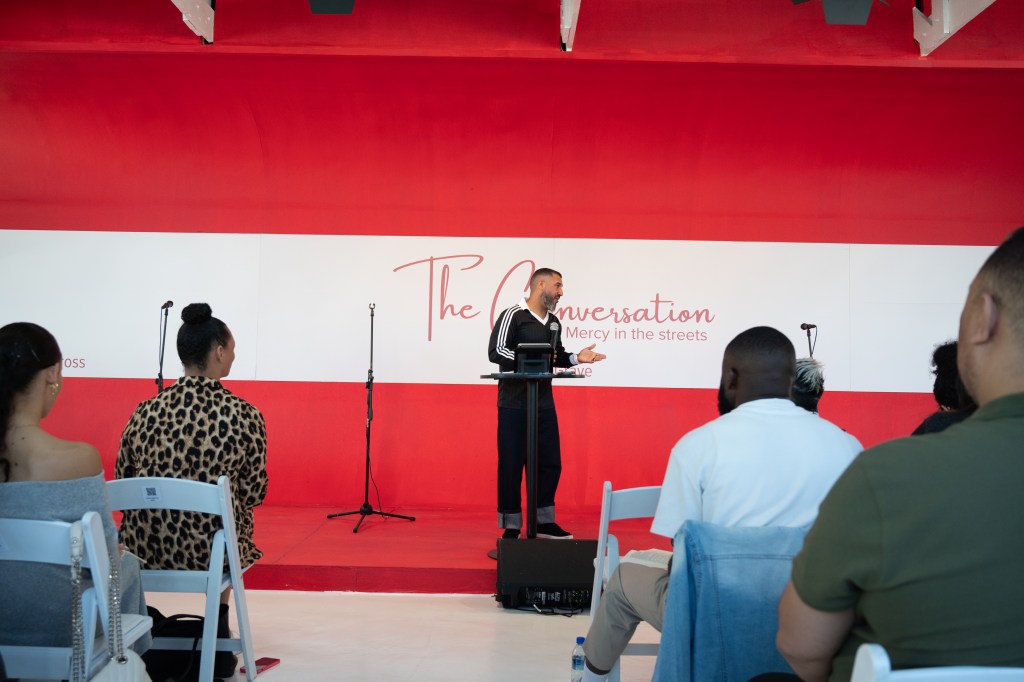
This past Sunday, Pastor B brought the room into a deeply personal moment of truth through one of the most disarming questions in Scripture:
“Do you love Me?”
John 21:15–17
At face value, it feels simple — almost too simple.
But as the message unfolded, it became clear: this is not a surface-level question. It is a soul-level invitation. An inflection point — one that carries the power to restore identity, realign purpose, and redefine devotion.
A FAITH BEYOND CELEBRATION
The message opened with a powerful reminder: Christianity is not built on a past event, but on a present reality.
Jesus is not only risen — He is alive, active, and engaged.
And yet, Pastor B introduced a striking tension:
Many believe in the resurrection, but few are living from its power.
The same power that raised Christ from the dead is not only available — it dwells within every believer. But it is not automatically expressed. It is not passive.
It flows through something far more personal: relationship.
Not proximity to church.
Not familiarity with Scripture.
But intimacy with Jesus Himself.
PETER: THE ANATOMY OF A CONTRADICTION
To unpack this, the message zoomed in on one of Scripture’s most juxtaposed characters — Simon Peter.
Bold, yet impulsive.
Faith-filled, yet inconsistent.
Devoted, yet capable of denial.
After publicly declaring his loyalty, Peter denies Jesus — not once, but three times.
What follows is not just a moment of failure, but something deeper: shame.
And shame doesn’t just exploit emotional vulnerability — it silences identity.
Even after the resurrection, when Jesus appears to the disciples, Peter is present —but not engaged.
In the room, but not fully there.
Because it is entirely possible to be close to Jesus physically, yet distant from Him emotionally.
THE SILENT WEIGHT OF SHAME
The message took a revealing turn here, naming something often left unspoken in spiritual spaces:
Shame doesn’t always look like withdrawal.
Sometimes it looks like presence without participation.
You show up.
You sing.
You serve.
But internally, there’s a quiet narrative running:
“I disqualified myself.”
“I failed too deeply.”
“I’m not who I used to be.”
And so, like Peter, many find themselves muted in the very moments that once defined them.
WHEN FAMILIAR PATTERNS STOP WORKING
In John 21, Peter returns to fishing — the very thing Jesus originally called him out of.
This isn’t rebellion.
It’s regression.
A retreat to what feels known, controllable, and safe.
But the result?
Nothing.
No catch. No progress. No breakthrough.
Until a voice from the shoreline cuts through the routine:
“Cast your net on the other side.”
Same boat.
Same water.
Same environment.
…until Jesus steps in.
And suddenly — everything changes.
The revelation is both subtle and profound:
Sometimes the issue isn’t effort — it’s alignment.
GRACE BEFORE CONFRONTATION
What happens next is unexpected.
Before Jesus addresses Peter’s denial, He prepares a meal.
Fire. Bread. Fish.
Provision already in place.
No interrogation.
No public correction.
Just presence.
It is a striking picture of divine posture:
Jesus meets failure not with accusation — but with invitation.
THE QUESTION BENEATH THE QUESTION
Then comes the moment.
Three times, Jesus asks:
“Do you love Me?”
Not:
“Why did you fail?”
“Can I trust you again?”
“Will you do better?”
Just this one question: “Do you love me?”
Why?
Because Jesus is not after behaviour modification — He is after heart transformation.
As Pastor B framed it:
The question is not for Jesus’ knowledge. It is for Peter’s revelation.
Each response draws Peter deeper — not into guilt, but out of hiding and into honest self-awareness.

A LOVE THAT GOES BEYOND WORDS
There is another layer beneath the surface.
The language reveals a tension:
Jesus asks for unconditional, sacrificial love —
but Peter responds with a more limited, brotherly affection.
And within that exchange, another conflict is unfolding —
the tension between who Peter has been and who he has been called to be.
Simon — the man shaped by impulse, fear, and failure.
Peter — the man named by Jesus, a rock, steady and called with purpose.
In this moment, it is Simon answering.
Not the bold, confident disciple who once declared unwavering loyalty,
but the humbled man who has come face to face with his own limitations.
It’s as if he is saying:
“I love You… but I know who I’ve been. I know where I’ve fallen short.”
Yet Jesus does not withdraw the question.
He does not lower the standard to match Simon’s insecurity —
nor does He reject him because of it.
Instead, He meets Simon in his honesty
while still calling forth Peter.
Because transformation doesn’t begin with perfection —
it begins with honest surrender.
And in that space, between who he was and who he is becoming,
grace does its deepest work.
PURPOSE FLOWS FROM DEVOTION
After each response, Jesus gives instruction:
“Feed My lambs.”
“Tend My sheep.”
The order matters.
Love → then assignment.
Not the other way around.
Purpose is not the reward for performance — it is the overflow of devotion.
THE END OF SELF-DIRECTED LIVING
Jesus then makes a striking statement about Peter’s future:
There will come a time when you no longer go where you want — but where you are led.
This is the cost of real love.
Not obligation.
Not control.
But surrender.
To truly love Jesus is to relinquish the illusion of being self-made.
THE COMPARISON TRAP
In a final moment of deflection, Peter points to another disciple:
“What about him?”
It’s a familiar instinct — measuring our journey against someone else’s.
Jesus responds with clarity:
“What is that to you? You follow Me.”
In other words:
Your calling is not comparative — it is personal.
A QUESTION THAT STILL ECHOES
As the message closed, the atmosphere shifted from teaching to reflection.
No hype.
No distraction.
Just a quiet, pressing invitation:
Do you love Me?
Not:
- When it’s easy
- When it’s visible
- When it’s rewarded
But:
- When it costs
- When it stretches
- When it requires everything
THE TAKEAWAY
This is not just a biblical moment — it is a present-day encounter.
Because the same question Jesus asked Peter…
He is still asking today.
And your answer carries more weight than you may realise.
It has the power to move you:
from shame to restoration,
from inconsistency to faithfulness,
from proximity to true relationship.
FINAL REFLECTION
What if the breakthrough you’re looking for
is not found in doing more…
…but in answering one question honestly?
Do you love Him?
And not just in word —
but in surrender.

 Beyond Sunday
Leave a comment