Spotlight Series: Dr. Chad on Kingdom Business, Divine Pivots, and Building for Impact
This article forms part of the “Inside The Thought Shack” series — a follow-up collection of reflections, revelations, and deeper conversations emerging from Beyond’s recent marketplace gathering. While the original feature explored the overarching themes and prophetic tensions that shaped the evening, this series spotlights the individual voices that carried those themes into focus.
Because what unfolded at Thought Shack was never merely a conversation about entrepreneurship, leadership, innovation, or success.
It was a reframing of business itself through the lens of Kingdom identity, stewardship, obedience, and cultural influence.
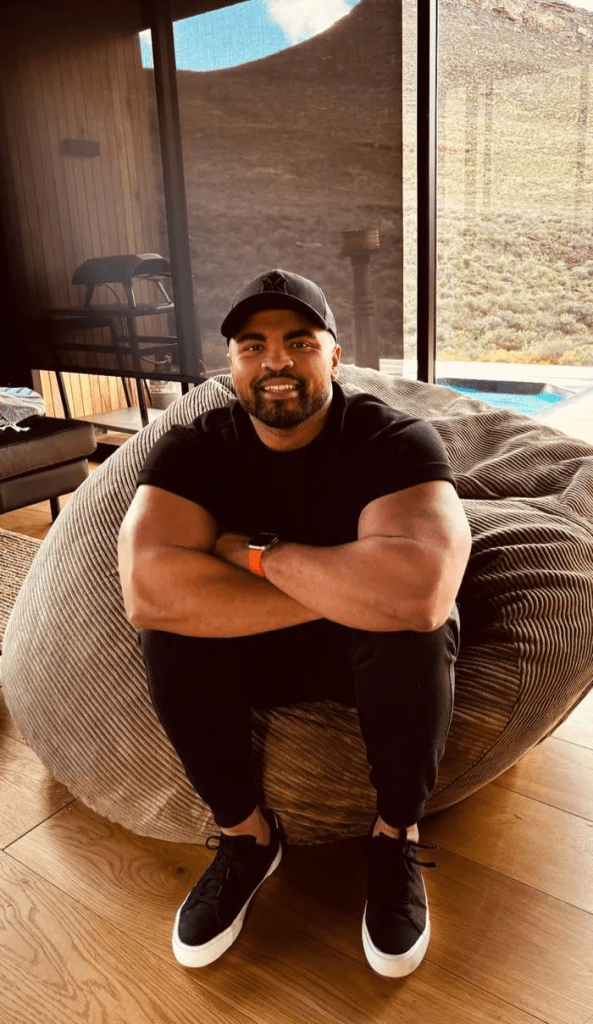
In this edition, the spotlight turns to Dr. Chad Marthinussen — a medical doctor turned serial entrepreneur whose story carried both the weight of deep personal pain and the clarity of divine instruction.
What emerged from his contribution was not simply entrepreneurial insight. It was a theology of dominion. A revelation of surrender. A blueprint for building systems that carry Kingdom impact far beyond personal success.
Missed the original article? Read:
Inside The Thought Shack: The Marketplace Awakening — For The Honour Of His Name
THE PIVOT WASN’T STRATEGIC. IT WAS PROPHETIC.
One of the evening’s defining moments came when Dr. Chad reflected on his transition out of medicine and into entrepreneurship.
The question sounded simple:
How do you know when it’s time to pivot?
But his answer dismantled much of the polished mythology surrounding entrepreneurial success.
The pivot did not begin with ambition.
It began in a valley.
“There comes a point where your linear thing you’re doing isn’t giving you what you know you’re supposed to be getting,” he shared.
What followed was a deeply vulnerable account of depression, emotional exhaustion, and profound spiritual weariness during his years in medicine — a season where the very thing he had devoted his life to became the source of immense pain.
Yet in hindsight, he now recognizes what he could not see at the time:
God was orchestrating a transition.
Dr. Chad recounted a moment of intercession with his pastor that became a turning point in his life. In the vision, a large brown building — representing the hospital — stood before him as the source of his pain. As he turned and walked away, he described feeling lighter with every step.
Then came the moment that changed everything.
“Jesus appeared next to me in this vision and He said:
‘Walk my son, walk.’”
What followed was not merely healing.
It was commissioning.
As he walked with Christ, he began seeing people follow behind him. In the distance stood another building — this time a boardroom. Himself as an entrepreneur. Himself building.
The revelation was unmistakable:
the pivot was not self-generated.
It was divinely instructed.
And perhaps that became one of the evening’s most important insights.
In a culture obsessed with hustle and self-made narratives, Dr. Chad’s story reminded the room that some pivots are not ambition-driven.
They are obedience-driven.
FROM PRODUCTS TO ECOSYSTEMS
If the first half of Dr. Chad’s contribution dealt with surrender, the second dealt with scale.
Not scale for ego.
Scale for impact.
Today, Dr. Chad oversees multiple companies spanning healthcare, automation and agentic AI, mobility and security. Yet what stood out was not merely the number of businesses he operates — it was the way he thinks about them.
He no longer thinks in products.
He thinks in ecosystems.
“My first business was product,” he explained.
“I scaled a product. I sold a million units. Then I understood structure. Then I understood building a business — not a product.”
That distinction became one of the defining revelations of the evening.
Products can succeed.
Businesses can scale.
But ecosystems create sustained influence.
For Dr. Chad, ecosystems are interconnected structures designed to strengthen one another, share infrastructure, leverage intellectual property, and multiply impact beyond the capacity of a single company.
He described healthcare systems operating under the Innov8 Group umbrella, where independent businesses simultaneously reinforce one another. Another ecosystem, held through Luxco, spans mobility and security sectors.
But beneath every structure sits the same mandate:
people must encounter God through the excellence of what is being built.
“My goal is a million lives under management,” he shared regarding his healthcare vision.
“And when people encounter our businesses, they must say:
‘Thank You Lord for this experience.’”
This was not business language detached from faith.
This was faith embodied through systems.
And perhaps that is where the conversation shifted most dramatically.
Because Dr. Chad was not describing business as extraction.
He was describing business as stewardship.
Not transaction.
Encounter.
DIGGING DITCHES BEFORE THE RAIN
Throughout the evening, one recurring image framed much of Dr. Chad’s philosophy around entrepreneurship, preparation, and obedience:
The instruction to dig ditches before the rain became a metaphor for Kingdom building itself.
“You prepare as if you’re receiving a lot, even before you can see anything coming.”
That line landed heavily in the room.
Because most people wait for provision before they prepare.
Kingdom builders prepare before provision arrives.
For Dr. Chad, ecosystems are essentially large-scale ditches — structures designed to hold future overflow.
Which means entrepreneurship is not merely about generating income. It is about building capacity.
Not simply asking:
“How do I make money?”
But:
“How do I build something capable of carrying what God wants to release?”
Again and again, he returned to the tension between linearity and exponentiality.
As humans, we move linearly. We wake up. We build. We steward what is in front of us. We show up consistently.
But God moves exponentially through sustained obedience.
That idea reframed entrepreneurship entirely.
Because modern entrepreneurial culture glorifies speed, shortcuts, hacks, and overnight success. But what emerged from this conversation was something far deeper:
the Kingdom principle of faithful digging.
Daily obedience.
Consistent stewardship.
Preparing before proof arrives.
And suddenly entrepreneurship was no longer simply about scaling companies.
It became a picture of faith.
WHY DOMINION MATTERS
One of the evening’s most striking theological reflections emerged unexpectedly through the story of Joseph of Arimathea.
Reflecting on the burial of Jesus, Dr. Chad highlighted the prophetic significance of a wealthy man using influence, political access, and resources to honour Christ.
Joseph’s influence mattered.
His access mattered.
His resources mattered.
Without them, the story looks different.
And in that moment, the room confronted a necessary tension around wealth, influence, and dominion.
Not for ego.
Not for accumulation.
But for assignment.
“That’s why wealth is important,” Dr. Chad said.
“That’s why building something of significance is important.”
The revelation was not that wealth itself is the goal.
It was that Kingdom-minded influence becomes infrastructure for divine purpose.
That perspective radically reframes how believers think about business, scale, influence, and capacity-building.
Dr. Chad was not advocating for prosperity detached from surrender.
He was articulating stewardship.
The Kingdom needs builders who can enter rooms, shape systems, influence industries, and direct resources toward divine purpose.
THE DANGER OF BUILDING SOMETHING NOBODY WANTS
Amid the prophetic language and theological depth, Dr. Chad repeatedly grounded the conversation in practical wisdom.
His framework for validating business ideas was strikingly simple:
Start with the customer.
Every business begins with a person experiencing a problem.
Not branding.
Not aesthetics.
Not hype.
Not logos.
A problem.
Can you solve it?
Do enough people have it?
Does your solution genuinely help them?
Only then, he explained, do you begin thinking about the business model.
It was a needed correction in a culture increasingly obsessed with launching before listening.
One line in particular lingered in the room:
“You can build something for nobody.”
Simple.
But devastatingly true.
His medical background clearly shaped this systems-thinking approach. Just as doctors work through symptoms, histories, and probabilities before reaching a diagnosis, entrepreneurs must gather enough insight before assuming an idea is viable.
There is rarely perfect certainty.
Only informed discernment.
And discernment requires humility.
PEOPLE. PROCESS. PROFIT.
Another major insight emerged through Dr. Chad’s distinction between products and businesses.
Too many entrepreneurs, he argued, become consumed with perfecting ideas instead of building systems.
“You iterate and iterate until it’s perfect,” he said,
“and then nothing happens because you’re so focused on the product.”
A business, by contrast, is process.
It is systems.
People.
Empowerment.
Structure.
“If I leave any of my businesses, it should continue without me.”
That philosophy shapes the way he leads.
Rather than building rigid hierarchies dependent on his presence, he intentionally empowers people to think, create, and initiate without constantly requiring permission.
“I need to make mini-me’s in my business.”
It became one of the clearest leadership principles of the night:
healthy businesses multiply leadership, not dependence.
And underneath it sat a framework he repeatedly returned to:
“Business is three things:
People.
Process.
Profit.”
In that order.
RIGHTEOUSNESS SHOULD SHIFT THE ROOM
As the evening drew to a close, the conversation moved beyond strategy and into something deeper.
Dr. Chad left the audience with reflections that felt less like motivational business advice and more like Kingdom blueprints for leadership.
Among them was one statement that lingered long after the event ended:
“Righteousness in the room changes the room.”
Not performance.
Not charisma.
Not networking.
Presence.
The idea that believers are not merely called to occupy spaces — but to spiritually influence them — became one of the defining themes of the evening.
He spoke about worship preceding wisdom.
About obedience unlocking provision.
About God providing outside conventional systems.
About refusing to shrink assignments down to the size of personal comfort or understanding.
And woven through all of it was one recurring principle:
“Seek first the Kingdom.”
Not as a slogan.
Not as Christian language.
But as alignment.
Because surrender changes desire itself.
What once drove you begins to lose its grip. Your ambitions shift. Your metrics change. Your definition of success transforms.
And perhaps that is the real pivot.
Not simply moving from one industry into another.
But moving from self-built ambition… into Kingdom assignment.
DIG BEFORE THE RAIN
If there was one image that ultimately defined the evening, it was this:
a generation digging ditches before seeing clouds.
Preparing.
Building.
Structuring.
Stewarding.
Obeying.
Not because the evidence already exists —
but because God said rain is coming.
And maybe that is what Thought Shack revealed most powerfully that night:
the future will not be built merely by talented people.
It will be built by surrendered ones.

 Beyond Sunday
Leave a comment