Pastor B’s Pentecost Call to Break Silence, Carry Fire, and Become the Church
There was something profoundly fitting about gathering in a coffee shop on Pentecost evening.
Not because it offered an alternative venue. Not simply because it felt intimate or unconventional.
But because of where it stood.
Positioned at the gateway to Cape Town’s city centre, overlooking the constant movement of people into and out of the city and standing at the intersection connecting the highways and byways of the region, the location carried a symbolism that was difficult to ignore.
Throughout Scripture, God often meets people at places of transition — gateways, crossroads, roads where destinies intersect and journeys begin.
Pentecost itself was never intended to remain confined to an upper room. The outpouring of the Holy Spirit was always destined to move outward — into streets, marketplaces, homes, cities, and nations.
And on this particular Pentecost evening, gathered at a place where people passed through, where routes converged, and where the city opened before us, there was a quiet sense that the setting itself was preaching.
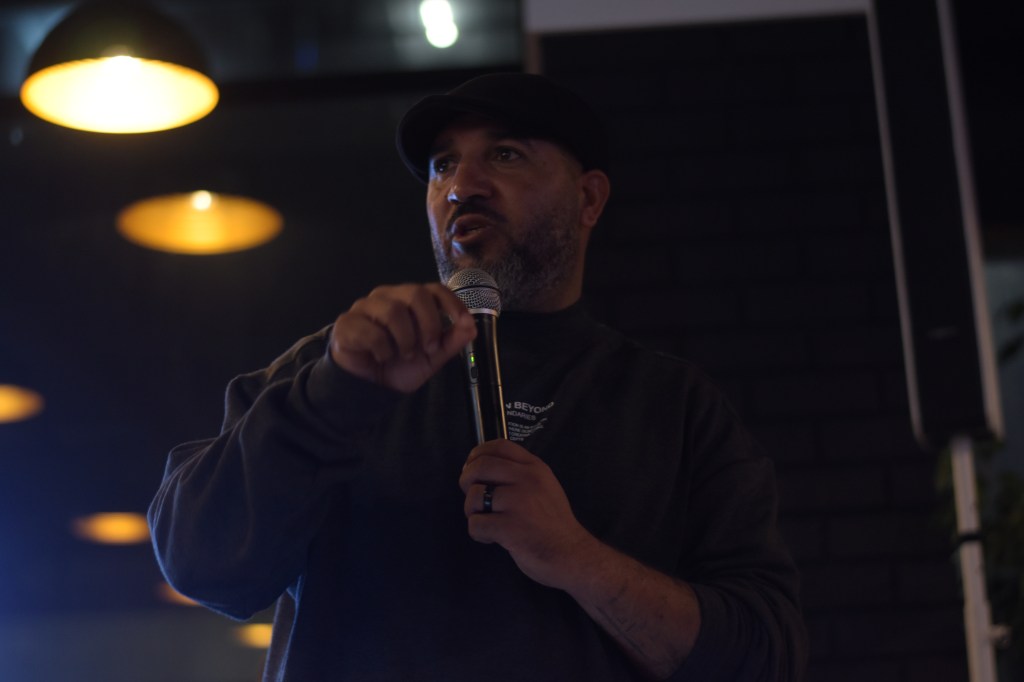
The Church was never called to hide from the world.
It was called to stand at the gates.
To become a beacon.
A witness.
A people carrying the presence of God into the pathways of everyday life.
Perhaps that was what made the evening feel so significant.
There were no stage lights.
No polished production.
No attempt to manufacture a moment.
Instead, there was something deeper.
Something weightier.
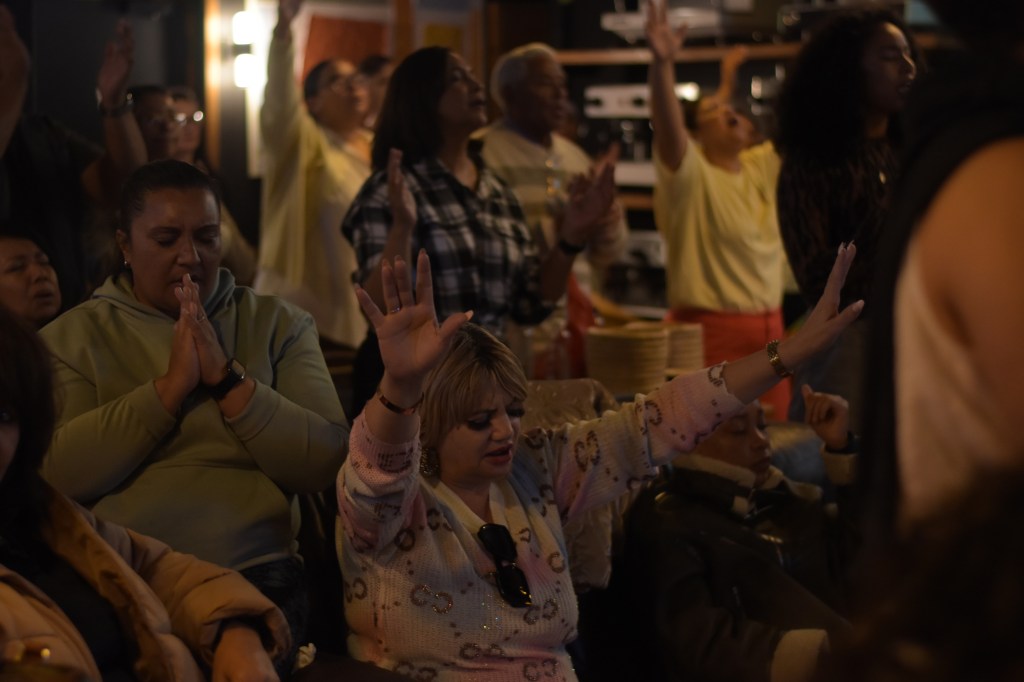
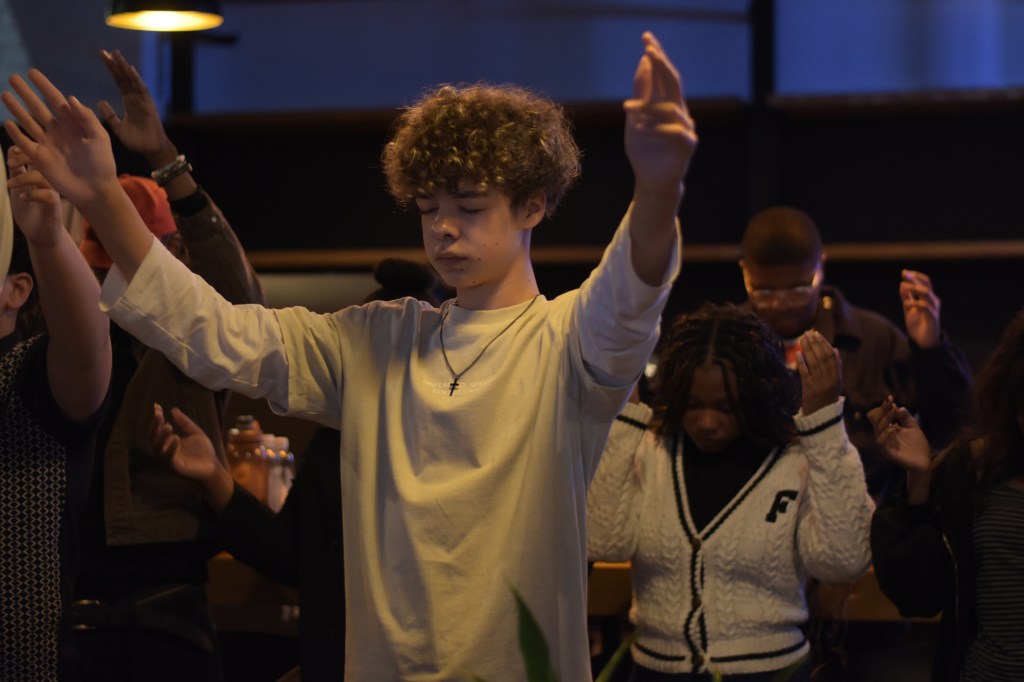
Before Pastor B even opened Scripture, the room had already become a sanctuary of testimony, worship, prayer, and encounter. People shared stories of God’s faithfulness. Voices were lifted in worship. Hearts were opened in prayer.
And throughout the evening, there was an unmistakable sense that God was not merely being discussed. He was meeting people directly.
Yet beneath every testimony, every prayer, and every moment of ministry, one message kept surfacing:
The Church was never meant to become spectators of God.
It was always meant to become participants in His Spirit.
What followed was not centred on emotional experiences or spiritual spectacle. It was a call to dependence — specifically, dependence on Holy Spirit.
From that foundation flowed a message that moved from identity to dependence, from worship to community, and ultimately to Kingdom authority.
Because Pentecost was never merely about being filled. It was about being formed.
Formed into a people who carry the fire of God beyond the gathering and into every sphere of life He has called us to influence.
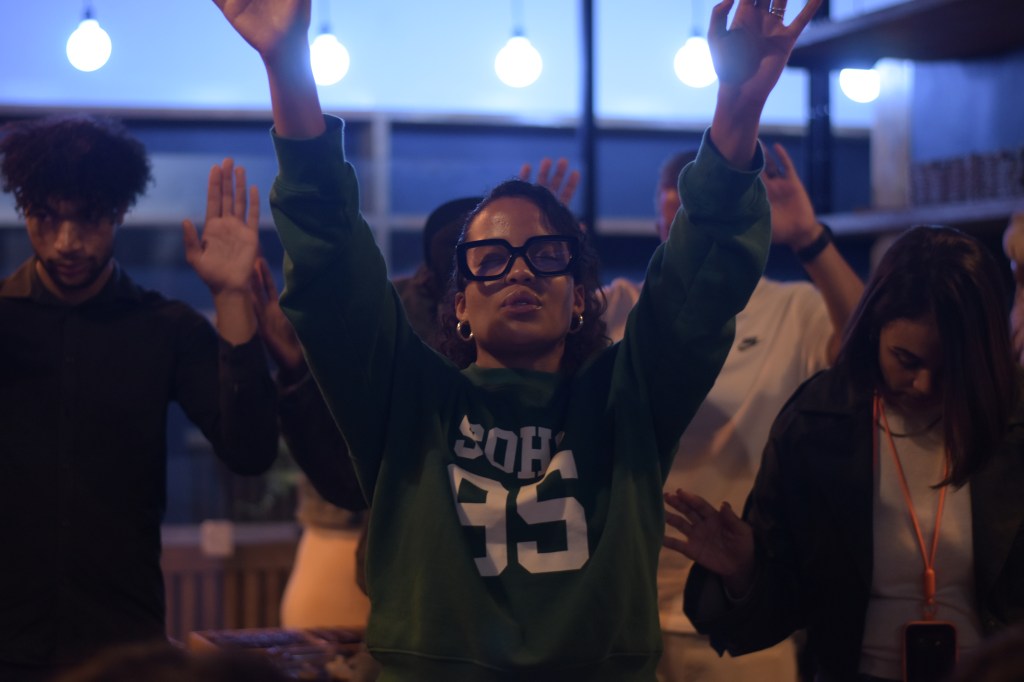
YOU WERE NEVER MEANT TO STAY THE SAME
Before theology and instruction, Pastor B spoke pastorally.
He reflected on the privilege and responsibility of walking with people — not seeing attendance, but seeing lives. Not measuring people by their broken places, but by the blueprint God has written over them.
“We don’t judge you based on the crack,” he said. “We only see God’s plan and purpose for your life.”
The statement became one of the defining themes of the evening.
God does not define people by their fractures.
He sees the calling.`
He sees the destiny.
He sees the hidden treasure waiting to be unlocked.
And perhaps that became the lens through which the rest of the evening unfolded.
Because if Heaven sees possibility where people see limitation, then Pentecost cannot remain a historical event we admire from a distance.
It becomes an encounter that transforms.
Pastor B pointed to Peter as the example.
Before Pentecost, Peter was fearful, hesitant, and prone to retreat.
After Pentecost, he stood publicly before crowds and boldly proclaimed Christ as thousands encountered Jesus.
Not because Peter became extraordinary.
Because Holy Spirit empowers ordinary people to become witnesses.
The challenge lingered over the room:
How long can we encounter the presence of God while remaining committed to preserving old versions of ourselves?
Pentecost was never intended to create passive believers.
It was designed to awaken purpose, identity, and spiritual authority.
“You are not a statistic,” Pastor B declared. “Your life matters.”
The message demanded a decision.
Would people remain consumers of church culture or become carriers of God’s presence?
“I CAN’T TAKE YOU IN”
One of the most arresting moments of the evening came when Pastor B said something that initially felt almost uncomfortable in its honesty:
“I would love to take you in… but I can’t.”
It was not rejection.
It was discipleship.
He described leadership not as carrying people into encounters, but creating environments where people learn to pursue God for themselves.
The atmosphere can be prepared.
The table can be set.
But eventually, every believer must learn to go in themselves.
That invitation reframed the entire evening.
Because dependence on church moments was never God’s design. Relationship was.
The Holy Spirit was never intended to become an occasional emotional experience.
He was given as Helper.
Counsellor.
Comforter.
Strength for ordinary Tuesdays.
Presence in everyday pressure.
Again and again, Pastor B returned to the same challenge:
“You’ve got to go in.”
Leaders can preach.
Worship teams can lead.
Churches can create space.
But hunger for God cannot be outsourced.
The deeper invitation of Pentecost was not visitation.
It was habitation.
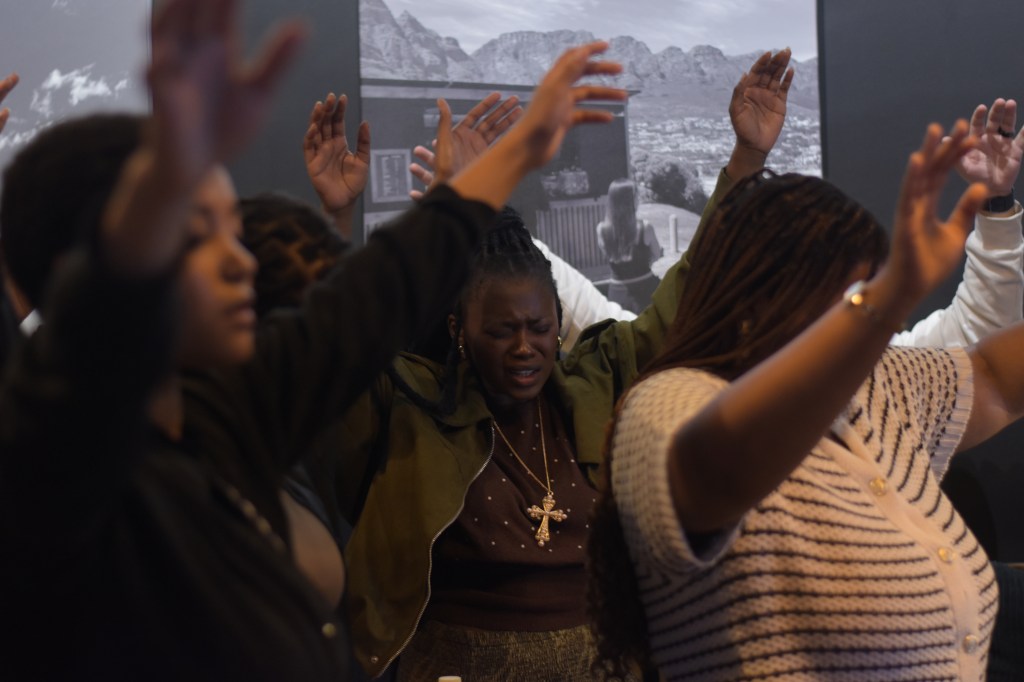
THE BAPTISM WE NEED TO SURVIVE
As the evening progressed, the invitation became increasingly urgent.
Pastor B spoke repeatedly about the baptism of the Holy Spirit — not as denominational language or theological preference, but as spiritual necessity.
His concern was not attendance. It was sustainability.
Because increasingly, believers are attempting to navigate complex, demanding, pressurised lives through inspiration alone.
His message was direct:
“You will not survive this world without the baptism of the Holy Ghost.”
Not because storms disappear.
Storms remain.
Pressure remains.
Disappointment remains.
But God’s answer has never been self-reliance.
His answer has always been presence.
This was not presented as fear.
It was presented as invitation.
The same Spirit poured out in Acts remains available today.
The same power.
The same presence.
The same empowerment.
Not merely to experience on Sundays — but to walk with every day.
THE WAR AGAINST SILENCE
Perhaps the most striking thread woven throughout the message was Pastor B’s insistence that one of the enemy’s greatest strategies is silence.
“The enemy knows if he can silence you, he can stop you from binding and loosing anything on the earth.”
Throughout the evening, he connected worship, prayer, praise, and declaration to spiritual authority.
Clapping hands.
Lifting voices.
Praying in the Spirit.
Declaring the promises of God.
To some, these may appear emotional or unnecessary.
But Pastor B framed them as deeply biblical acts of spiritual warfare.
“We’re not shouting for the sake of shouting,” he said. “We know what it does in the spirit.”
Drawing from the stories of Paul and Silas worshipping in prison, the walls of Jericho collapsing, and Moses lifting his hands in battle, he painted a picture of praise not as personality, but participation.
Not performance.
Positioning.
Then came one of the clearest warnings of the night:
“Sometimes we are loud about the wrong things. We must become loud about the right things.”
Suddenly, the repeated invitations to engage made sense.
To worship.
To pray.
To speak.
To lift hands.
Not because volume impresses Heaven. But because silence can become agreement with things God never said.
Pastor B returned repeatedly to a sobering thought:
The enemy does not always need to destroy believers.
Sometimes he only needs to silence them.
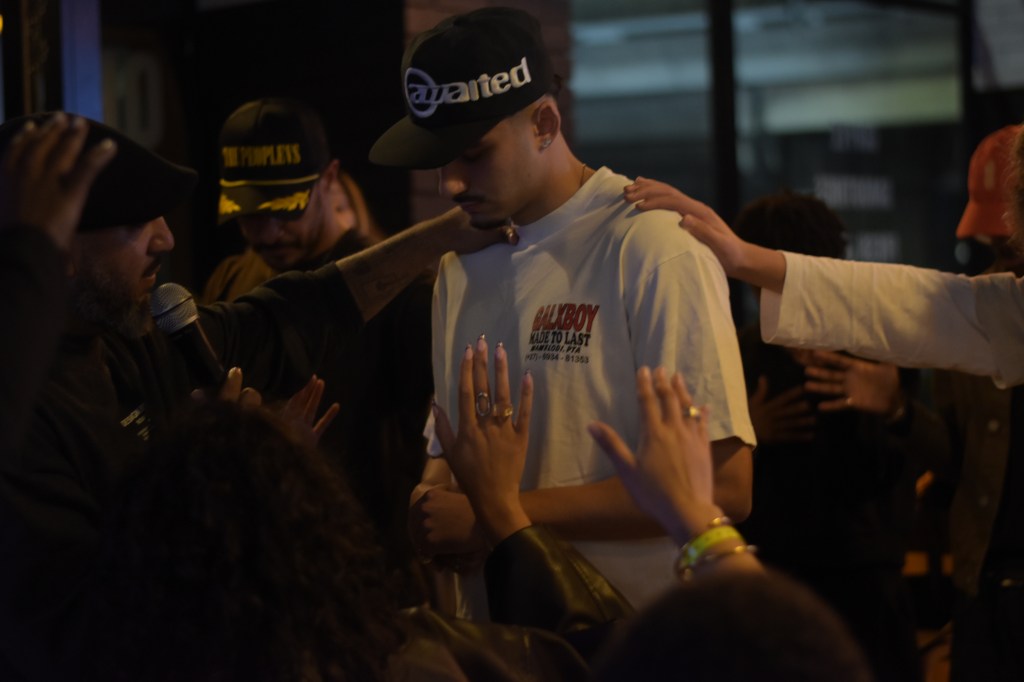
THE POWER OF COMMUNITY — COMMON UNITY
Toward the end of the message, Pastor B dismantled another common misunderstanding surrounding Pentecost.
The miracle of Pentecost, he suggested, wasn’t only fire… it was family.
“The true power of Pentecost was coming together in one place and in one accord — unity”
Before Pentecost, the disciples argued about status, position, and greatness.
After Pentecost, they became family.
They carried one another.
Covered one another.
Prayed for one another.
Moved together.
Shared life.
In a culture obsessed with personal brands, individual journeys, and self-promotion, Pastor B presented a radically different vision.
Pentecost produced community.
A people who understood:
My worship can strengthen your faith.
My obedience can unlock your courage.
My presence can remind you not to quit.
Community was never the side effect of Pentecost.
It was one of its greatest outcomes.
“We don’t come for ourselves,” Pastor B said. “We come for each other.”
It was a message deeply aligned with the culture Beyond continues to build — a culture rooted not in performance, but people.
Not spectatorship, but belonging.
Not isolation, but family.
YOU ARE ECCLESIA
As the message drew toward its close, Pastor B returned to identity.
The Church, he reminded the room, was never man’s idea. It was God’s.
The Ecclesia — the called-out ones.
People entrusted to represent the government of the Kingdom of God in the earth.
Not passive observers of culture.
Participants.
Representatives.
People who pray when others remain silent.
Declare when culture retreats.
Stand when compromise beckons.
Build what Heaven has entrusted to them.
People who refuse to surrender their voice.
Because the outpouring of the Spirit on Pentecost gave ordinary people authority to carry extraordinary presence.
“You are not just standing here as a citizen of a country,” Pastor B preached. “You are standing here as a representative of the Kingdom.”
And with that came the final charge of the evening:
Don’t allow life to make you silent.
Don’t speak fear where Heaven is inviting faith.
Don’t settle for inspiration when empowerment is available.
Then Pastor B closed with words that landed somewhere between blessing and commissioning:
“This is a house of champions. Break insecurity. Break imposter syndrome. Go champion well — for His Name.”
And perhaps that was the real invitation of Pentecost.
Not simply to remember the fire.
Not merely to celebrate the fire.
But to carry it into a waiting world.
To be formed by it.
To be marked by it.
To become the kind of Church Pentecost was always intended to create.
Not just filled.
Formed.
 Beyond Sunday
Leave a comment